Styles
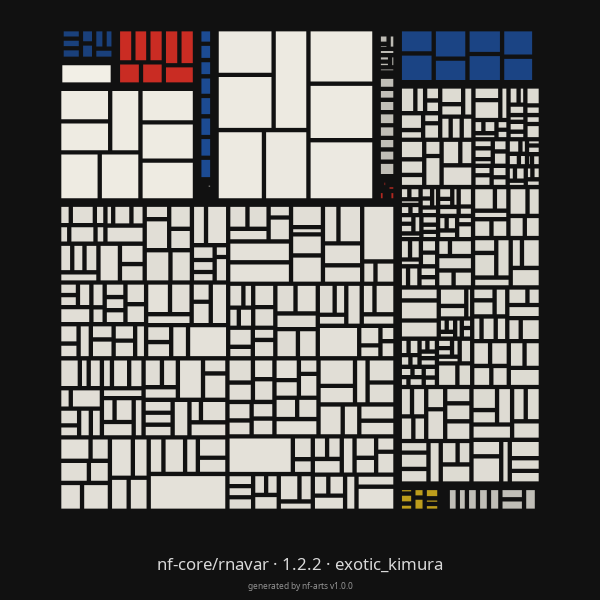
In every style, color is the process, cached tasks are faded and failed tasks are thinner, smaller, hollow or leafless. The session ID seeds the random choices, so a run always gives the same image.
Each style below shows the same run: the nf-core/rnavar megatest, 553 tasks, with the nfcore palette (mondrian for the mondrian style). More runs are in the gallery.
| Style | What it draws | |
|---|---|---|
radial |
Each process is a ring, each task an arc on it. Angle is time, clockwise from 12 o’clock. Thickness is peak memory. | 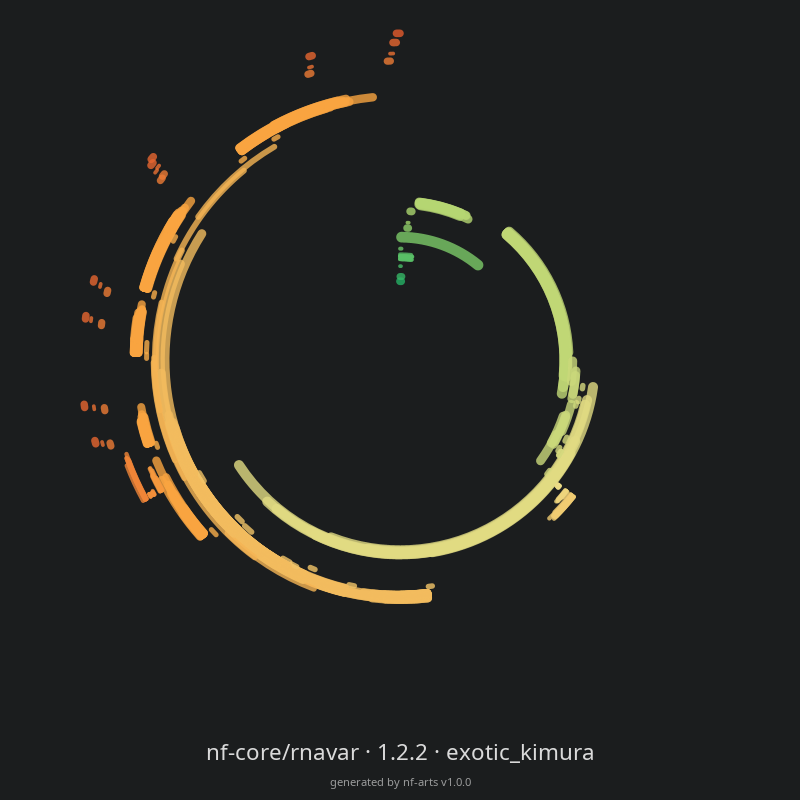 |
hilbert |
Tasks run end to end along a Hilbert curve in start order, each taking a share proportional to its duration. Thickness is peak memory. More tasks make a finer curve; the seed picks one of its 8 orientations. | 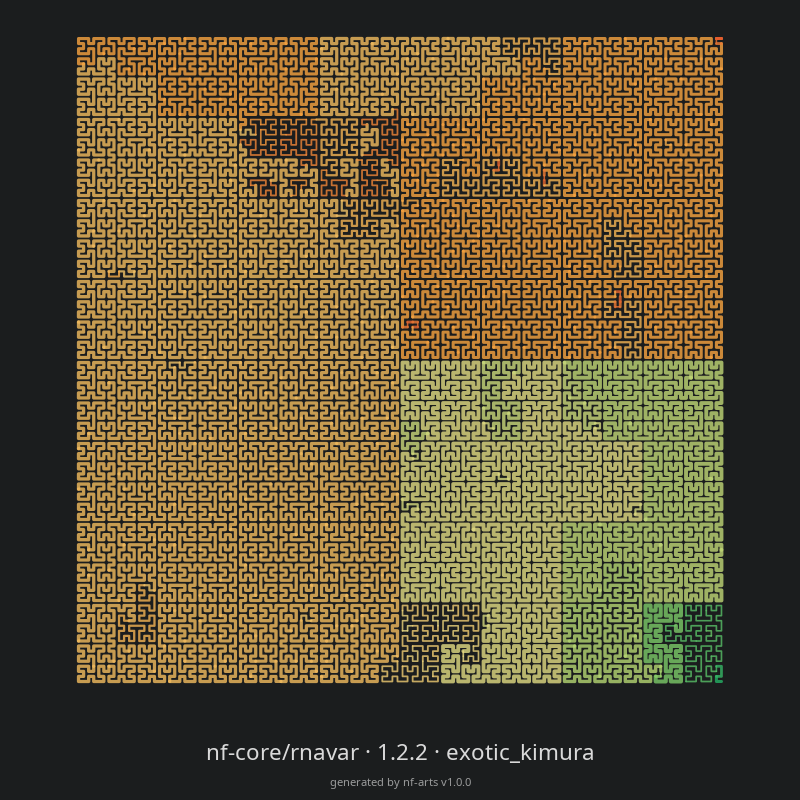 |
ridgeline |
One ridge per process, top to bottom, time left to right. Ridge height is how many of the process’s tasks were running, relative to its busiest moment. | 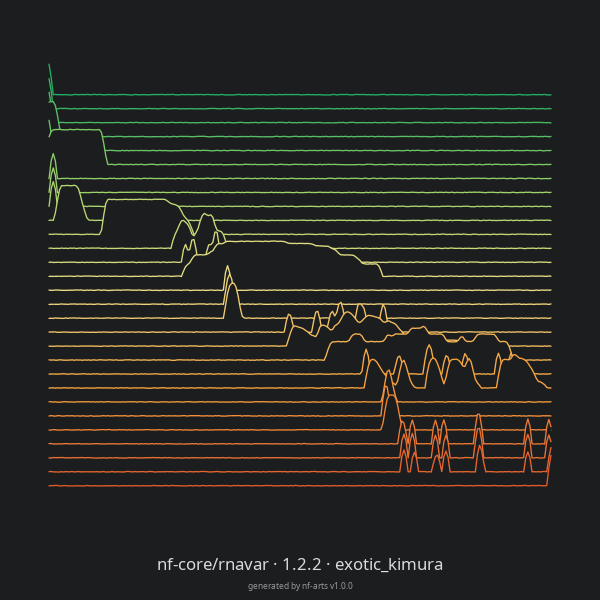 |
phyllotaxis |
Tasks are sunflower seeds on a golden-angle spiral, in start order. Dot size is peak memory. | 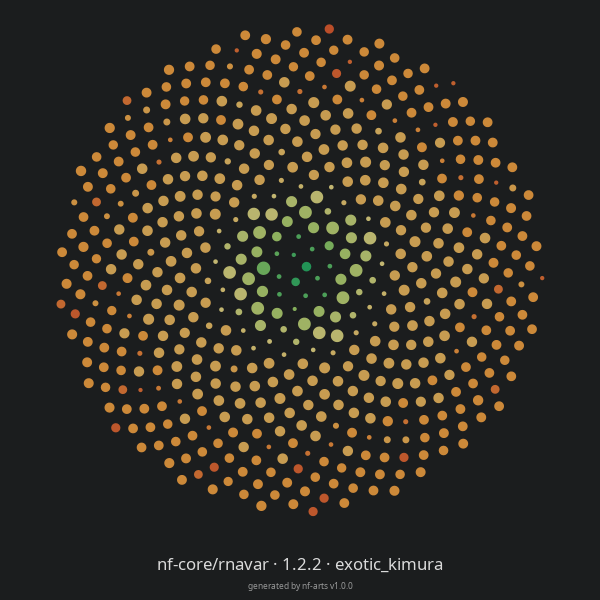 |
flowfield |
Each task is a brush stroke drifting through a seeded flow field, starting at its start order (x) in its process’s row (y). Length is duration, width is peak memory. | 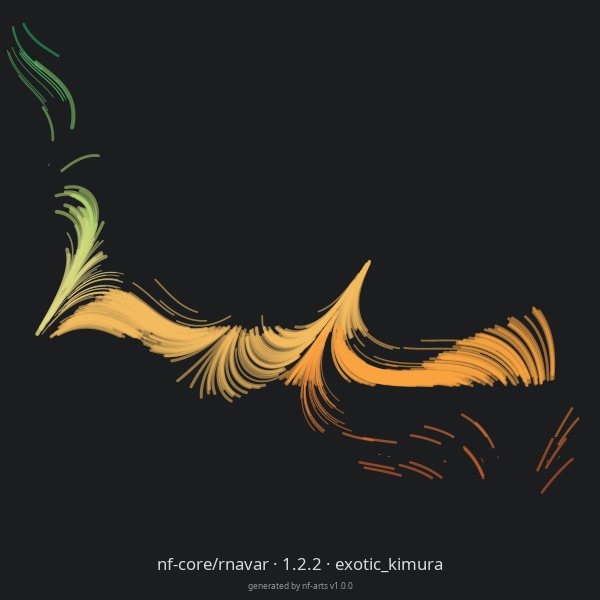 |
mondrian |
One block per process, split into one block per task, area proportional to duration. Opacity is peak memory; failed tasks are hollow. Defaults to the mondrian palette. |
 |
tree |
The run is the trunk, each process a branch in start order from the bottom. Branch length is how long the process was active. Each task is a twig with a leaf: twig length is duration, leaf size is peak memory. Failed tasks have no leaf. | 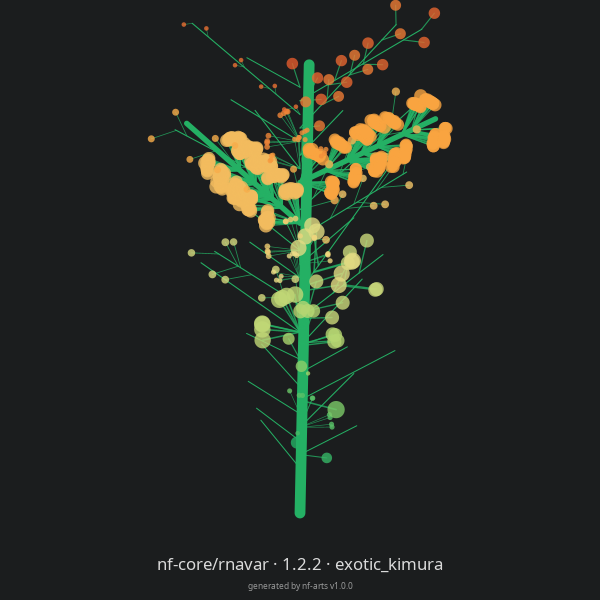 |
ginkgo |
The run is one ginkgo leaf. Each task is a vein fanning out from the stem and forking near its tip. Angle is start time, left to right, length is duration, width is peak memory. | 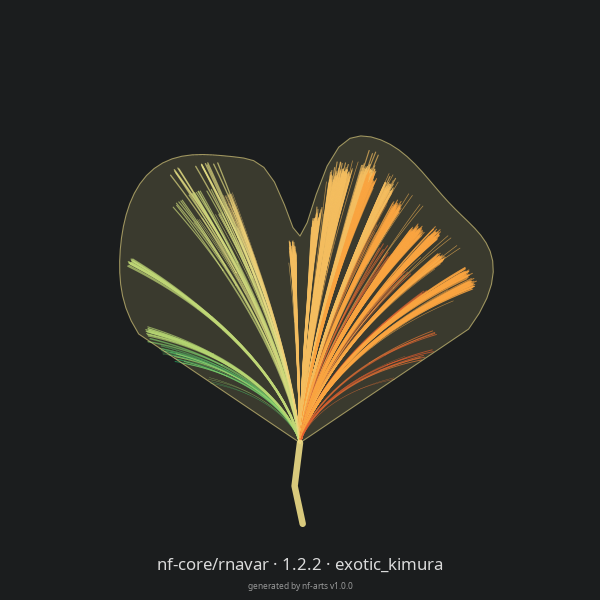 |